Creator Assistants
Utilizing Artificial Intelligence for YouTube Creators
CONTEXT
Recognizing the absence of personalized guidance for new YouTube creators, I envisioned a solution: the YouTube Creator AI Assistants. Integrating insights from the Artificial Intelligence Product Management course, I refined my previous case study by enhancing the problem statement, integrating CRISP-DM, and mitigating potential risks.
TIMELINE
3 months
ROLE
Product Designer & Researcher
PLATFORM
Desktop
OUTPUT
I crafted desktop UIs and prototypes for the Creator Assistants, considering their alignment with the Machine Learning implementation.
AI is everywhere
Ever used voice assistants like Siri or Alexa? Or received tailored Netflix recommendations? These everyday conveniences are powered by AI, seamlessly enriching our lives. Now, imagine harnessing AI's potential to revolutionize YouTube content creation.
BUSINESS UNDERSTANDING (2/9)
Utilizing the framework method learned in the course, I used some CRISP-DM methodologies (Business Understanding, ML System Design, and Potential Risk) to evaluate the issue.
SOLUTION (3/9)
By analyzing user behaviors, content preferences, and engagement patterns, AI algorithms can provide personalized recommendations, tutorials, and strategies that cater to each creator's unique needs. This can help creators optimize their content, engage their audience, and grow their channels more effectively.
Potential Risks in Production (5/9)
I’ve identified potential risks in production that might occur.
BUSINESS CONCEPT
Operating on a freemium model, this product offers essential features free of charge, with advanced options available through a PRO account upgrade. Beyond this, I foresee integrating additional revenue streams by leveraging Google services, amplifying user engagement, satisfaction, and revenue generation through cross-promotion and service monetization.
USER CONCEPT
The Creator Assistants, named as Pixel, offer personalized guidance surpassing current YouTube sources. They also serve as invaluable brainstorming companions.
TECH CONCEPT
Regarding the machine learning models, NLP can create descriptions and captions while acting as brainstorming partners. Recommender systems offer tailored content suggestions and growth strategies. Time series analysis assesses audience growth trends.
Target User: New YouTube content creators seeking guidance.
Why It Matters: Utilizing AI can improve guidance leads to enhanced content quality, engagement, and faster channel growth.
Current State: Creators rely on general tips and trial-and-error.
Gaps: Lack of personalized recommendations, feedback, and guidance.
Business Impact: Enhanced content quality, higher audience engagement, and faster channel growth.
Constraints: Technical infrastructure for data collection and AI implementation.
Success Metrics: Improved audience growth rate, increased user engagement, higher creator retention.
Output: Personalized recommendations, content suggestions, analysis reports, and generated content such as video descriptions and captions.
Outcome: Improved content quality, audience engagement, and channel growth for creators. Additionally, users' efficiency in managing their channels and content creation tasks would increase.
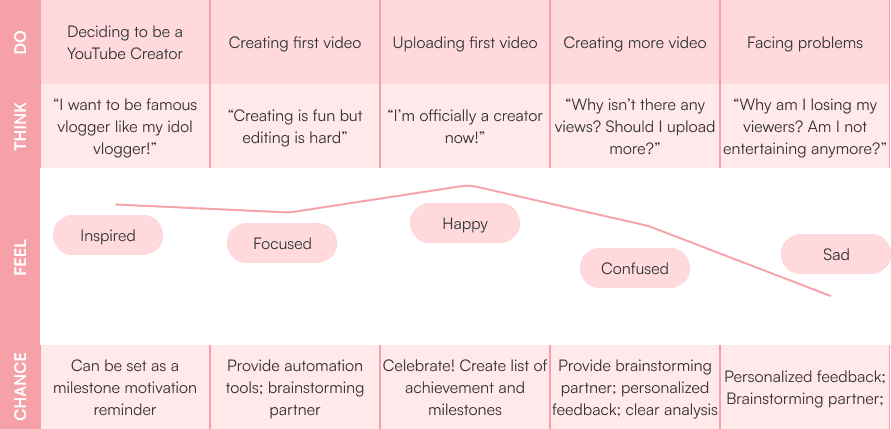
I summarize the user's journey based on the insights I discovered during the research phase, which will lead to the problem statement
TOOL
Figma
RESEARCH (1/9)
After learning that several friends have stopped making videos for their YouTube channel, I decided to look into this further.
Desk Research
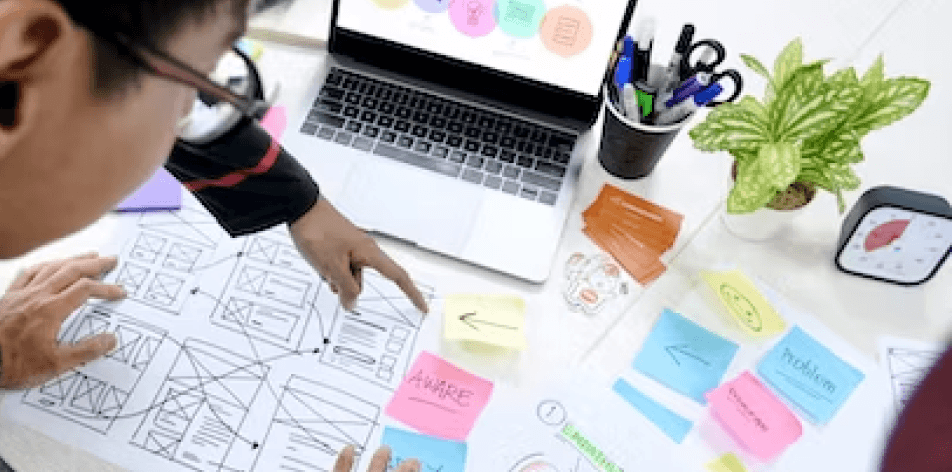
Based on my research, here are some key points I discovered:
YouTube Creators thinks they need personalized feedback and guidance
They think they need more transparent and user-friendly algorithm
In-Depth Interview
Through interviews with three YouTube creators, I discovered a common issue: a lack of guidance and feedback for improving their channels, which presents a significant challenge for new creators.
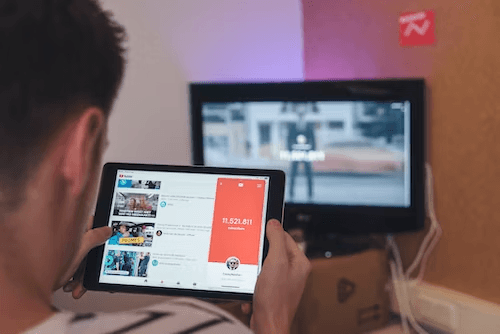
Immersion
I attempted to start my own YouTube channel and ran into the same issue I did during the interview: a lack of guidance and feedback.
PROBLEM STATEMENT
“New and aspiring YouTube content creators lack personalized guidance and recommendations to optimize their channels, resulting in suboptimal content, slower growth, confusion, even abandoning their channel.”
Model Issues: Possibility of data drift due to changing content trends and user behaviors.
Latency: Balancing real-time recommendations with user experience.
Training-Serving Skew: Ensuring consistency between training and production environments.
Sources of Issues: Changing viewer behavior, trending topics, and evolving content preferences.
ML System Design (4/9)
These decisions ensure that our AI Assistants are efficient, effective, and seamlessly integrated into the platform.
Cloud-based solution for computational power and scalability.
Online model learning for real-time adaptation.
Online predictions
for immediate assistance.
ml vs heuristics (6/9)
While heuristics can provide straightforward solutions, they might fall short in delivering the level of personalization, automation, and accuracy that AI-driven approaches can offer. The YouTube Creator AI Assistants leverage NLP and AI to analyze large volumes of data, recognize complex patterns, and provide targeted recommendations, resulting in a more impactful and personalized experience for users. For example:
Basic Recommendations
Heuristics can offer basic recommendations and guidelines based on established rules. For instance, recommending certain video lengths, posting frequencies, or content types. While these heuristics can provide general advice, they lack personalization and might not adapt well to individual creator needs.
Content Analysis
Heuristics might assess content performance based on metrics like likes, views, and comments. However, they may struggle to capture nuanced aspects like audience engagement, sentiment, or deeper insights that NLP and AI models can extract from textual data.
validation (7/9)
I divided validation in this study case into two phases: Design & Concept validation and Model validation plan
I conducted comprehensive usability testing by presenting the design prototype of the YouTube Creator Assistants to actual users. Here’s some key facts that I gathered:
4 of 5 participants would likely use this feature in the future.
3 of 5 participants would upgrade their account from freemium to PRO.
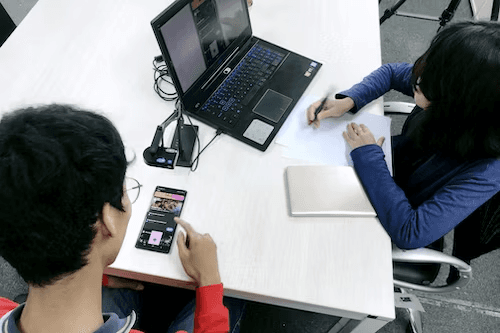
For the validation stage of the ML process, I think fine-tuning and validating the machine learning models by training the models on real data, validating their predictions, and iterating based on the outcomes to enhance accuracy and relevance would be suitable for this model.
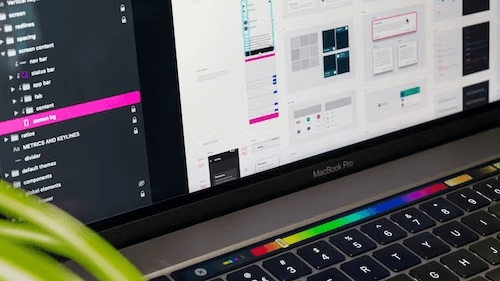
Final design (8/9)
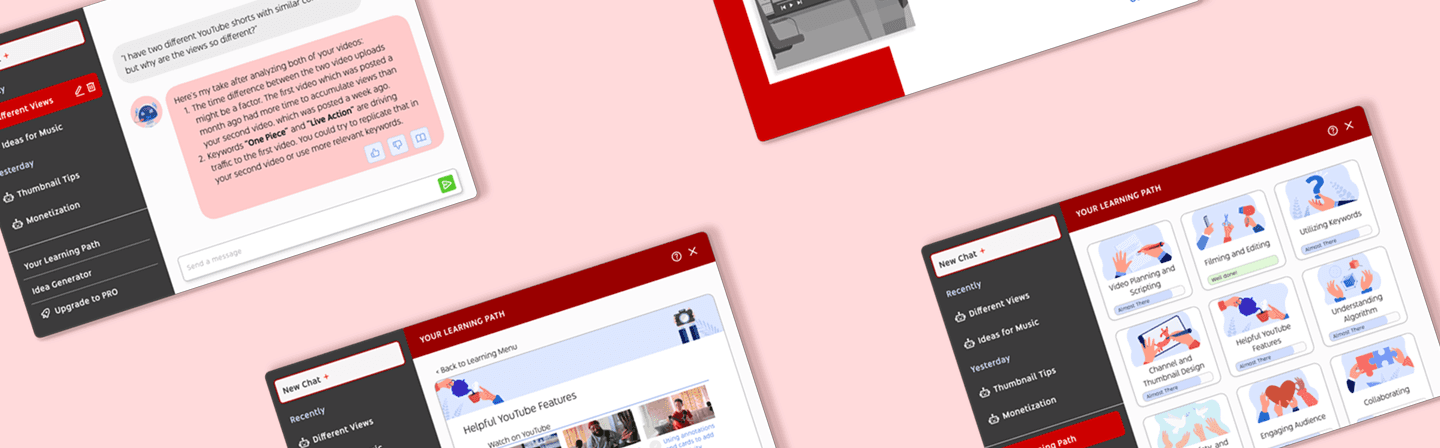
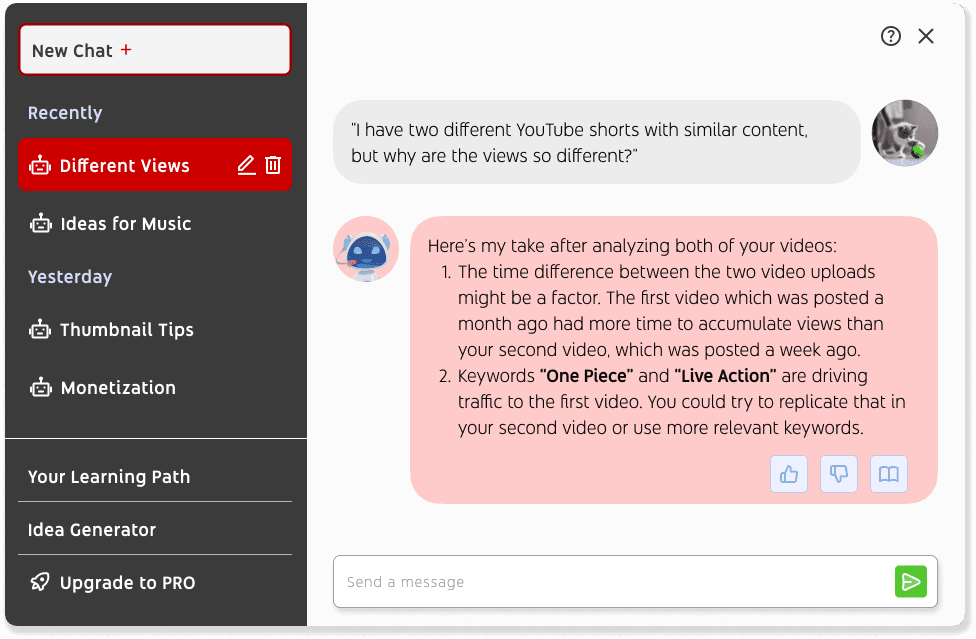
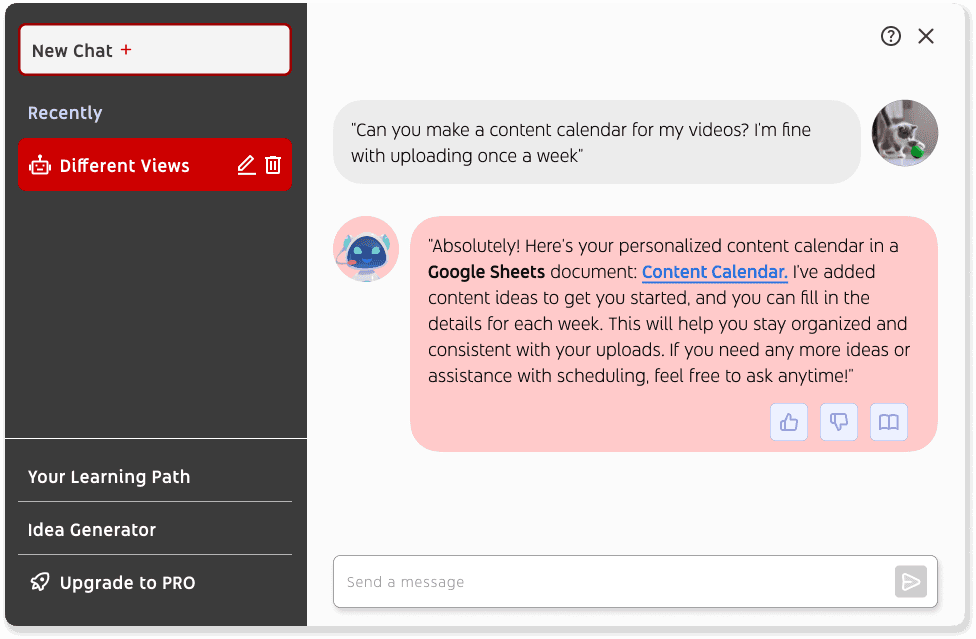
This project's final design concept provides a comprehensive solution to the common challenges faced by YouTube content creators. The AI Assistant, affectionately known as Pixel, serves as a dedicated mentor and guide for creators. Pixel provides direct feedback, analyzes content, assists in the creation of content schedules, and recommends collaboration partners, among other things.
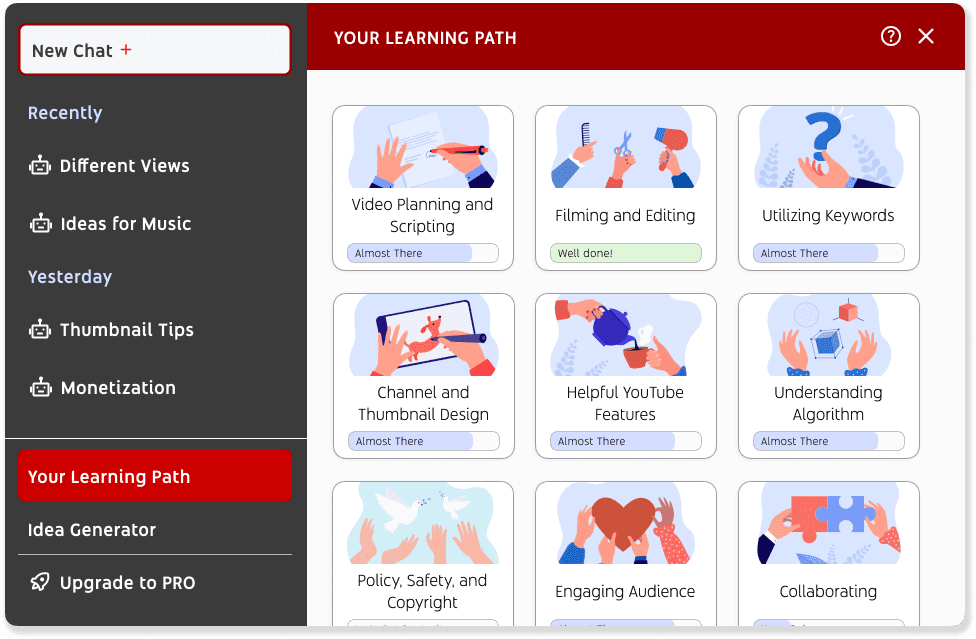
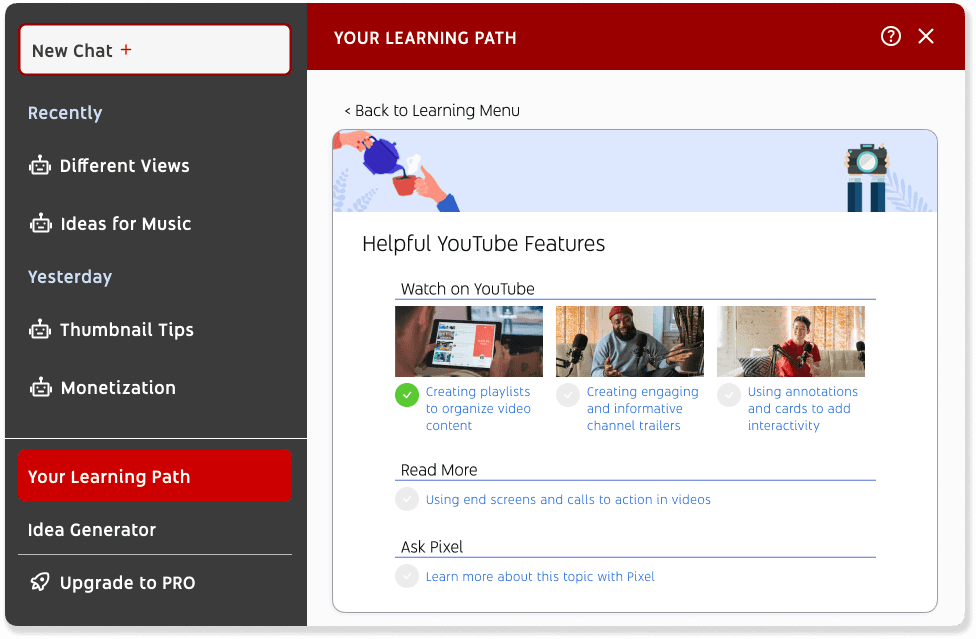
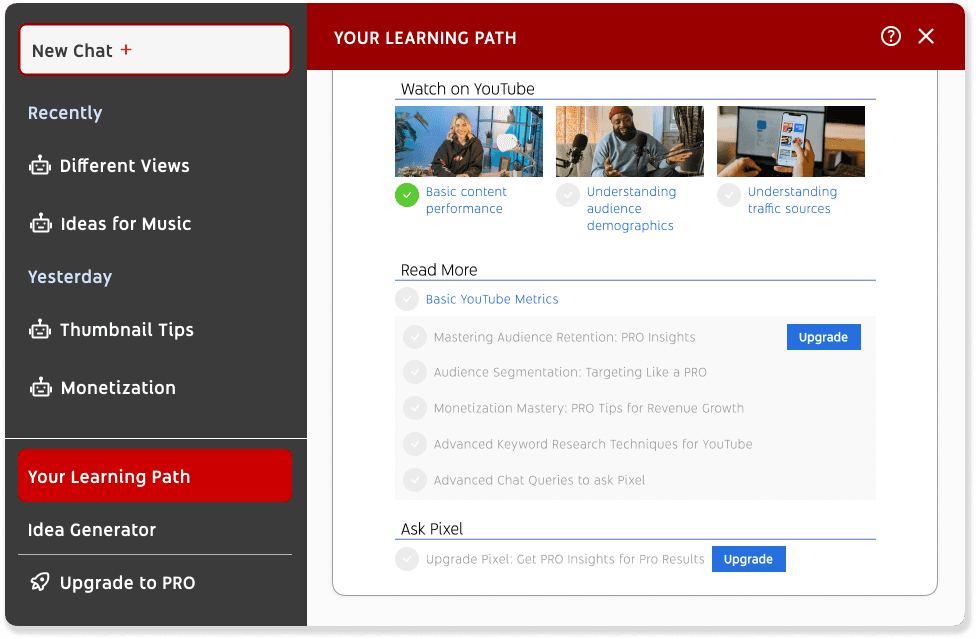
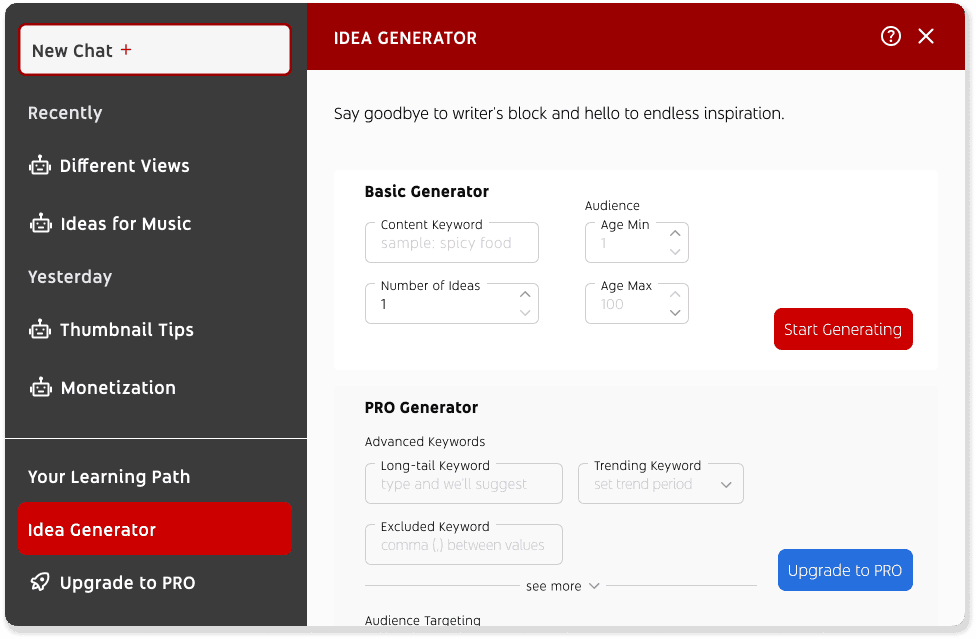
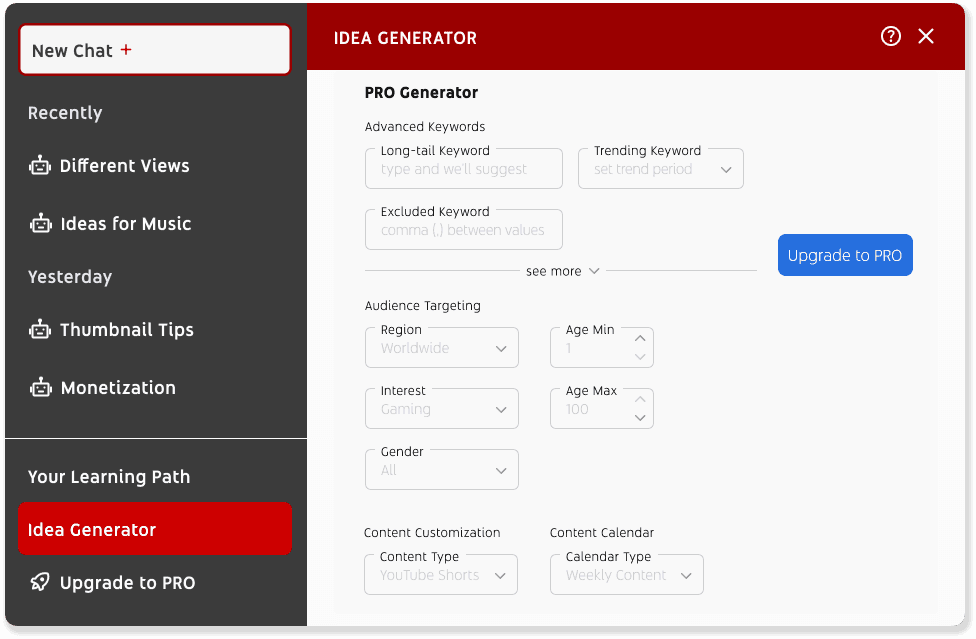
The Learning Path feature curates essential learning materials for creators to ensure a continuous learning journey. The Content Idea Generator generates ideas for those looking for content inspiration. Lastly, the Freemium and PRO tiers give users access to a variety of premium features, allowing creators to customize their experience and accelerate their YouTube journey. This comprehensive approach provides creators with the tools and knowledge they need to thrive on the platform.
Pixel serves as a valuable brainstorming partner by leveraging its access to vast amounts of YouTube data and user content. The AI can analyze the content, access historical trending topics, recommend collaboration partners, and more.
brainstorming partner
Pixel's ability to provide personalized feedback is rooted in its data-driven insights.
personalized feedback
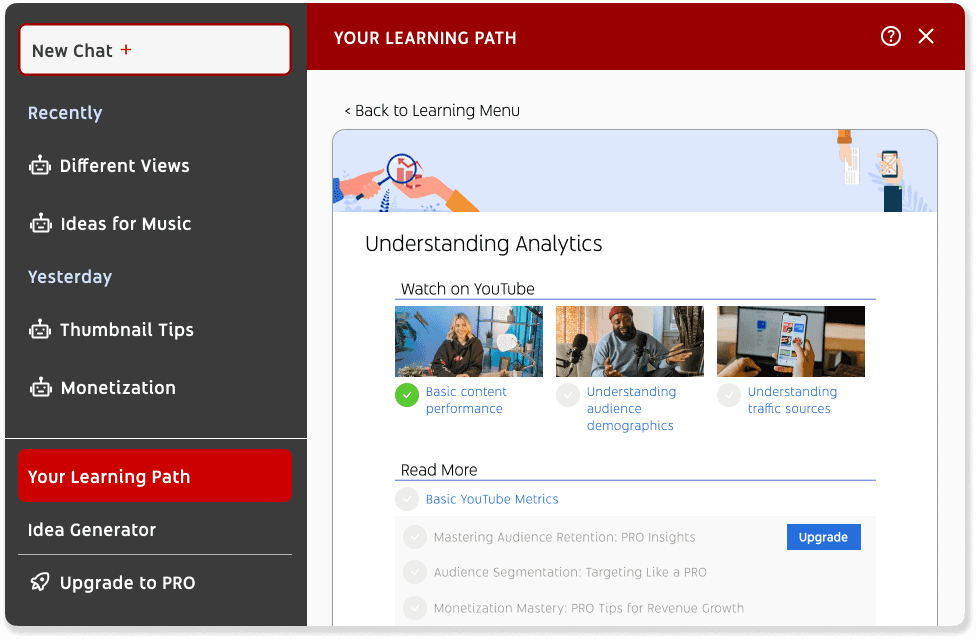
The Learning Path organizes learning materials into a structured curriculum, making it easy for creators to follow a step-by-step journey to acquire essential skills. Users can track their progress, see completed modules, and identify areas for improvement, ensuring a clear understanding of their learning journey.
Learning path
You can try the prototype here.
prototype
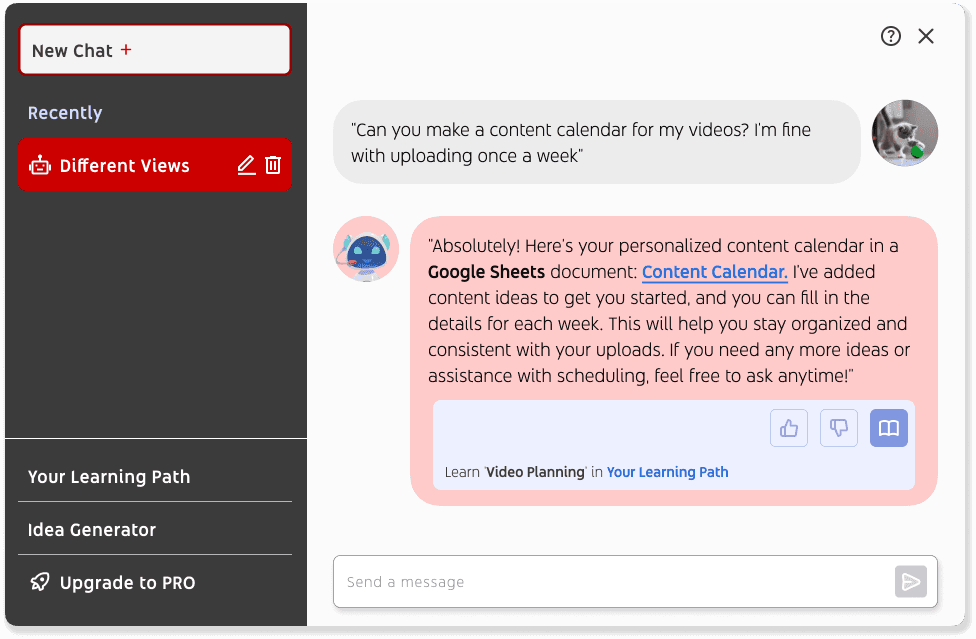
The AI assists with tasks like document creation, event scheduling, and content writing, and so on, enhancing efficiency and productivity.
task assistance
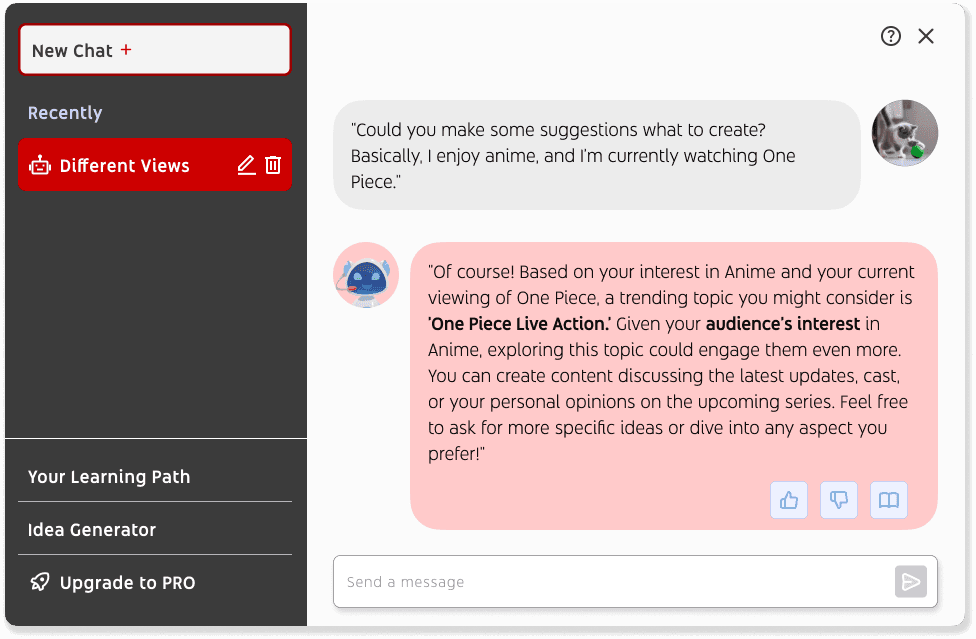
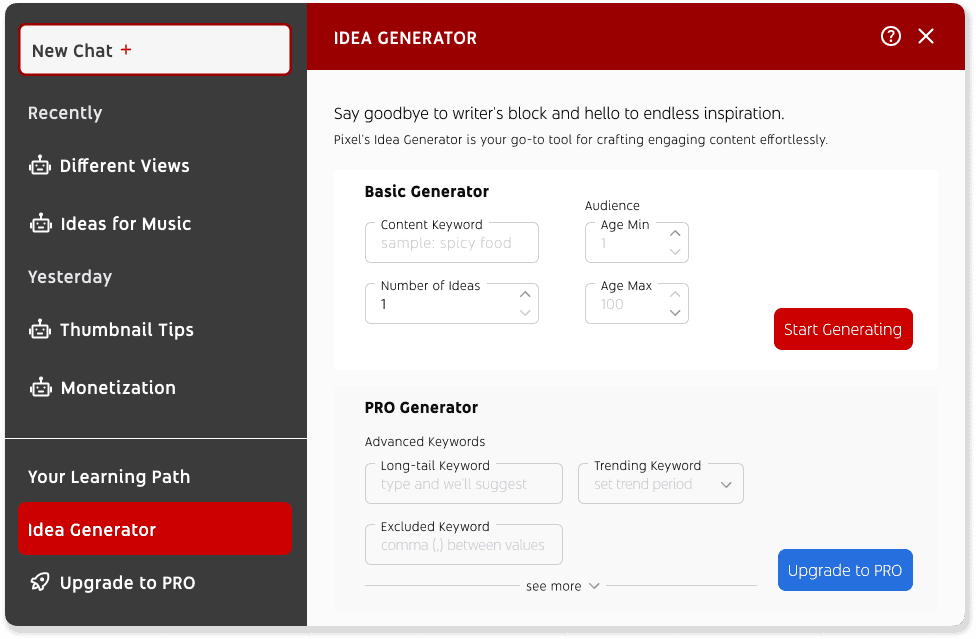
The generator encourages creators to diversify their content by suggesting ideas from various angles, ultimately helping them engage a broader audience and foster creativity.
content generator
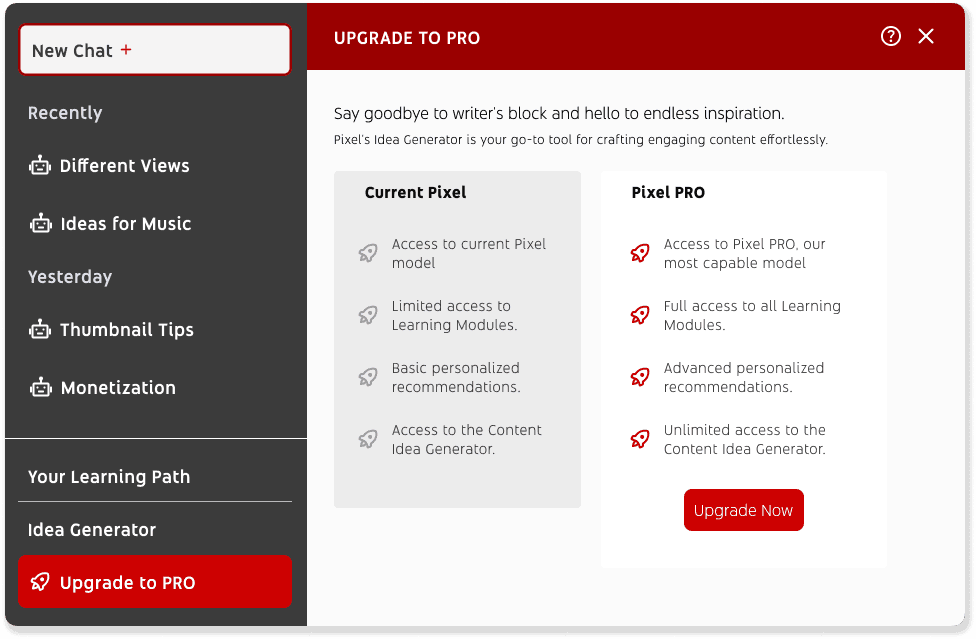
In the freemium tier, users enjoy basic AI assistance, limited learning paths, and access to a simplified content idea generator. While it's ideal for newcomers, it encourages user engagement and serves as a stepping stone for upgrading to the PRO tier.
The PRO tier offers an advanced AI assistant, comprehensive learning paths, and an enhanced content idea generator. It provides serious content creators with personalized analytics, collaboration insights, and a wide range of resources to optimize their content. This tier not only generates revenue but also fosters customer loyalty and data-driven improvements.
freemium and pro
conclusion and learnings (9/9)
Cost-Benefit Analysis: While the potential of ML is incredible, its implementation comes at a cost. The course I took demonstrated the importance of carefully weighing the anticipated benefits against the resources required. This realization fundamentally changed my perspective, prompting me to take a more pragmatic approach to decision-making.
Improved Understanding: Throughout this journey, the knowledge gained from the AI Product Management course has vastly improved my understanding of the project's dynamics and potential ramifications. I've gained a better understanding of how to align AI-driven solutions with user needs.
Improved Feasibility: Applying the new concepts introduced in the course has significantly improved the project's feasibility. The structured methodologies provided, particularly within CRISP-DM, enabled me to methodically refine the solution, ensuring that it addresses all challenges.
Let's transform your ideas!